
When you attend your regular dental check-up, your dentist performs a visual exam of your smile. The dentist can spot signs of gum disease and many types of cavities with this evaluation. But you might wonder why your dentist will also ask you to undergo x-ray imaging of your smile.
While a visual oral exam can reveal many details about your smile, it cannot allow a dentist to see the inside of your teeth. X-ray imaging can illustrate potential issues with your dental health in greater detail, allowing for more precise diagnostics and treatment.
Routine dental x-rays are perfectly safe for patients of all ages. But you can feel more comfortable pursuing this preventive oral healthcare when you know more about the advantages it can bring to your smile. Discover three reasons why dentists recommend annual dental x-rays when you read on.
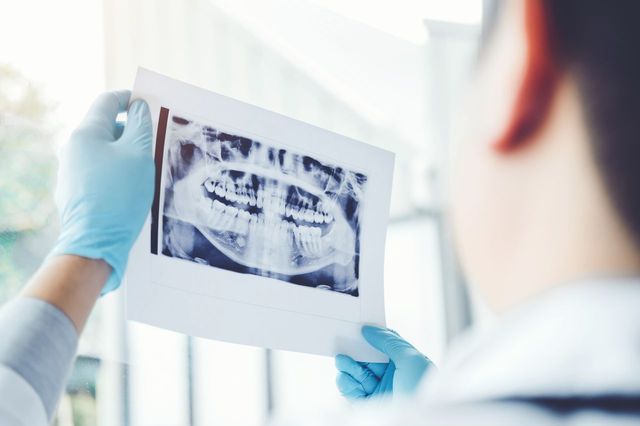
Why Do Dentists Take X-Rays?
Dentists take dental X-rays to see areas of the mouth that cannot be examined during a visual checkup. While your dentist can identify many problems during a routine exam, some dental issues develop between teeth, under the gums, or inside the bone where they are not visible to the eye.
Dental X-rays allow your dentist to detect problems early and provide treatment before they become more serious. By identifying issues in their early stages, X-rays can help prevent more extensive dental procedures later on.
Dentists commonly use X-rays to:
- Identify Tooth Decay
- Reveal Tooth Pulp Problems
- Monitor Tooth Positions
Your dentist may recommend dental X-rays as part of your regular preventive care or when you are experiencing symptoms such as tooth pain, swelling, or sensitivity. Taking X-rays periodically helps your dental team monitor changes in your oral health and ensure that small problems do not turn into larger ones.
Identify Tooth Decay
As mentioned, a dentist can spot some symptoms of cavities, like discoloration or a hole in the tooth’s surface, during a visual oral exam. But sometimes, you can form a cavity between two teeth or in another tricky spot that a dentist cannot see.
Tooth decay shows up clearly in a dental x-ray. A dentist can diagnose a cavity quickly with this imaging technology. The x-ray can reveal early signs of demineralization before a cavity develops as well.
This way, a dentist can intervene before you suffer this damage to your dental structure. You can preserve your natural smile with this enhanced preventive dental care.
Reveal Tooth Pulp Problems
Your teeth feature layers beneath the protective outer shell called enamel. The pulp, the central cavity within the tooth, is hidden by enamel. But it could still form issues that threaten your oral health.
For instance, if flow within the blood vessels becomes blocked or damaged, the tooth could become non-vital. Then it could face a heightened risk of becoming infected.
To ensure the tooth pulp remains healthy, they will want to evaluate it with an x-ray that can illuminate potential damage. This way, they can keep an eye on a non-vital tooth and intervene before further harm occurs.
Monitor Tooth Positions
The average dental patient has a full set of adult permanent teeth grown into place by the time they reach adolescence. However, a number of factors can push the teeth out of their naturally straight position. Crooked teeth can hurt smile aesthetics but also increase your risk of oral health issues.
When you receive regular dental x-rays, a dentist can see changes in the position of the teeth and help you stop further alignment problems from developing. The x-ray can also show the growth of wisdom teeth, an extra set of molars that can grow in adulthood.
Wisdom teeth might cause issues with your other teeth. So a dentist will want to see the progression of wisdom teeth growth and intervene with a tooth extraction before complications arise.
Are Dental X-Rays Safe?
Dental X-rays are very safe and use extremely low levels of radiation. Modern dental offices use digital X-ray technology, which significantly reduces radiation exposure compared to older film-based systems. In fact, the amount of radiation from a dental X-ray is very small and similar to what you may be exposed to during normal daily activities.
Dentists only recommend X-rays when they are necessary to evaluate your oral health. Protective measures such as lead aprons and thyroid collars may also be used during the process to further limit exposure.
Because dental X-rays help detect issues like cavities, infections, bone loss, and impacted teeth early, the benefits of taking X-rays far outweigh the minimal risk. By identifying problems before they worsen, dental X-rays allow your dentist to provide more accurate diagnoses and timely treatment.
If you have questions about dental X-rays or when they may be recommended, your dentist can review your oral health history and explain what is appropriate for your situation. Dental X-rays are often used as part of routine preventive care to help monitor changes in your teeth and gums over time.
How Often Should Dental X-Rays Be Taken?
At Derby Dental, dental X-rays are commonly taken during routine exams and preventive care visits to help identify potential concerns early. If you’d like to learn more about what’s included in a routine dental visit, you can explore our general dentistry services.